
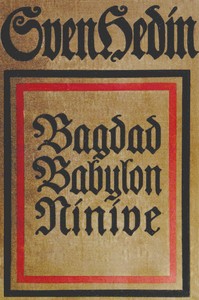
Bagdad, Babylon, Ninive by Sven Anders Hedin
I picked up Sven Hedin's Bagdad, Babylon, Ninive expecting a dry history lesson. What I got was a front-row seat to one of the most daring expeditions of the 19th century.
The Story
This is Hedin's own account of his journey through what was then the Ottoman Empire, modern-day Iraq. His goal was simple but monumental: to locate, map, and describe the ruins of ancient Mesopotamian cities that Europeans had only read about in the Bible or classical texts. The plot is his daily struggle. He deals with scorching heat, suspicious local guides, and the constant threat of illness. He describes bartering for camels, deciphering half-remembered local stories to find a lost wall, and carefully sketching everything he sees. There's no villain in the classic sense; the conflict is between his mission and a landscape that is actively trying to erase the past.
Why You Should Read It
Hedin isn't just a stuffy academic. His writing makes you feel the grit of the desert in your teeth. You share his wonder when he finally stumbles upon the massive, forgotten mound that was once Nineveh. You feel his frustration when he finds evidence of treasure hunters who got there first. What stuck with me was his sense of urgency. He wasn't just exploring for glory; he genuinely believed he was saving a history that was disappearing by the day. The book is a powerful snapshot of a world—both ancient and 19th-century—that we can never see again. It makes you think about what 'lost history' really means.
Final Verdict
This book is perfect for anyone who loves real-life adventure stories, armchair travelers, and people curious about archaeology before it became a high-tech science. If you enjoy tales of sheer human grit and curiosity, you'll be hooked. A word of warning: it's a product of its time, so some of Hedin's cultural perspectives feel dated. But read it for what it is—an incredible, firsthand record of discovery. It’s not a quick beach read, but it’s a truly rewarding one. You'll look at a map of the Middle East completely differently afterward.
This masterpiece is free from copyright limitations. It is available for public use and education.
Susan Rodriguez
11 months agoI stumbled upon this title during my weekend research and the inclusion of diverse viewpoints strengthens the overall narrative. If you want to master this topic, start right here.
Christopher Martinez
1 year agoGreat reference material for my coursework.
Charles Torres
1 year agoHaving read this twice, the storytelling feels authentic and emotionally grounded. One of the best books I've read this year.
Joshua Williams
1 year agoNot bad at all.




Joseph Jones
2 months agoHaving followed this topic for years, I can say that the chapter on advanced strategies offers insights I haven't seen elsewhere. Finally, a source that prioritizes accuracy over hype.