
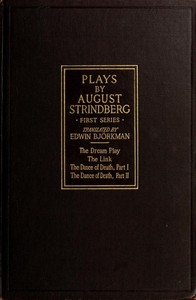
Plays by August Strindberg, First Series by August Strindberg
Let's talk about what you're actually getting into with this collection. It's not a light read, but it's a gripping one. Strindberg throws you right into the deep end of human conflict.
The Story
'The Father' is a psychological cage match. A cavalry captain and his wife are locked in a war over their daughter's future. But this fight isn't about talking it out. It's a campaign of manipulation, doubt, and mental sabotage. The wife suggests the captain might not even be the real father, weaponizing uncertainty to break him. You watch a seemingly strong man unravel, questioning his sanity and his place in his own home. It's claustrophobic and devastating.
'Miss Julie' happens over one sweaty Midsummer's Eve. Julie, the manor-born daughter, drifts into the kitchen and into a dangerous game with Jean, her father's ambitious valet. What starts as a flirtation fueled by wine and festival madness becomes a brutal dance of power. They seduce, confess, dream of escape, and then destroy each other's hopes. It's a stark look at how class and gender trap people, showing that crossing social lines can have catastrophic consequences.
Why You Should Read It
I keep coming back to Strindberg because he doesn't give his characters (or us) an easy way out. His people are flawed, often unlikeable, and completely fascinating. He was writing about the battle of the sexes and the cruelty of social structures over a century ago, but it doesn't feel dated. It feels urgent. The dialogue is like watching a fencing match—every line is a parry or a thrust. You're not just reading a play; you're stuck in the room with these people as they self-destruct. It's uncomfortable, but it makes you think hard about power, truth, and the stories we tell to win.
Final Verdict
This book is perfect for anyone who loves intense character studies and doesn't mind a story that leaves you with more questions than answers. If you're a fan of dark, psychological writers like Dostoevsky or Ibsen, Strindberg is your essential, angrier cousin. It's also great for theater lovers who want to see where modern, naturalistic drama really started to crackle. Fair warning: it's not a cheerful escape. But if you're ready for a short, sharp shock to the system that you'll be thinking about for days, this collection delivers.
This content is free to share and distribute. Share knowledge freely with the world.
Thomas Wilson
5 months agoImpressive quality for a digital edition.
Jessica Thomas
2 years agoLooking at the bibliography alone, the practical checklists included are a great touch for real-world use. Finally, a source that prioritizes accuracy over hype.
Karen Wilson
6 months agoIf you're tired of surface-level information, the emphasis on ethics and sustainability within the topic is commendable. Thanks for making such a high-quality version available.
James Anderson
7 months agoFinally found a version that is easy on the eyes.



Robert Wilson
3 months agoGreat value and very well written.