
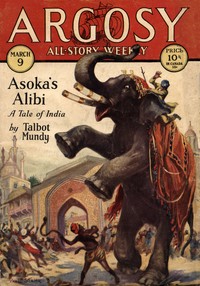
Asoka's alibi by Talbot Mundy
Asoka’s Alibi by Talbot Mundy is one of those books that floats under the radar but deserves a loud shout-out. You’ve probably heard of Asoka, the emperor who converted to Buddhism and spread peace. But what if his change of heart wasn’t so pure? Mundy’s novel digs into that question, pitting Indian politics, hidden manuscripts, and human motives against each other in a story that hooks you from the start.
The Story
The book centers on Sek, a quirky genie-like character (called a Yaksha) tied to a mystery spoken of only in legends. The narrative moves through the eyes of Sikh friends, all trying to uncover a secret about Asoka's past. There’s rivalry, unspoken alliances, and an “alibi” so deep it was never recorded openly. The real puzzle is regarding what actually motivated Asoka’s transformation after bloody battles. Mundy blends classic rugged colonial adventure with spooky folklore. While some readers might not expect this blend, the steadily unfolding intrigue around silent stone monuments supplies all the thrill you want from Eastern lore meets western pen. Simple truth?
Why You Should Read It
I personally geek out on character moral tension. Mundy masterfully hints that this ancient emperor might have been driven as much by shadowy motives as enlightenment. In *Asoka’s Alibi*, every political move is a balancing act. Modern parallels jump off the page – how stories of leaders get “reworked” to match current public opinion hundreds of years later. Also, Mundy writes in conversational tone that is as relatable as ordinary friendly conversation albeit from the 1930s viewpoint that surprisingly connects from another century. As modern readers, call it a well plotted yarn that includes intricate human desire laid over history. Importantly the book avoids sounding highbrow academia yet gives an intelligent serving for puzzle-solvers. It doesn't feel arduous; it flows quicker than many chunky thrillers I have talked about. Imperfections? Very few. The sense of good man challenged by the greatest moral puzzles.
Final Verdict
Perfect for readers fond of historical enigmas mixed with early adventurism – people like the Indiana Jones generation transferred to paperback— not supernatural horror exactly but deeply textured vignette into leadership fallibility embellished lightly. In simpler words: you’ll trust the tale's haunting mind tricks even in real life after sleeping. Requires you leaving bias for your history books behind + approachable.
You are viewing a work that belongs to the global public domain. Use this text in your own projects freely.
Ashley Jones
1 year agoI started reading this with a critical mind, the level of detail in the second half of the book is truly impressive. Highly recommended for those seeking credible information.
Joseph Thompson
3 months agoAs someone working in this industry, I found the insights very accurate.
Patricia Brown
11 months agoThe research depth is palpable from the very first chapter.
Jennifer Gonzalez
5 months agoUnlike many other resources I've purchased before, the practical checklists included are a great touch for real-world use. A rare gem in a sea of mediocre content.


Sarah Johnson
4 months agoI've gone through the entire material twice now, and the breakdown of complex theories into digestible segments is masterfully done. This exceeded my expectations in almost every way.