
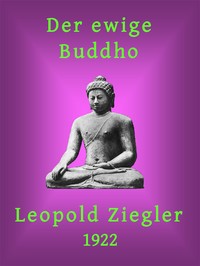
Der ewige Buddho: Ein Tempelschriftwerk in vier Unterweisungen by Leopold Ziegler
Leopold Ziegler's Der ewige Buddho: Ein Tempelschriftwerk in vier Unterweisungen (The Eternal Buddha: A Temple Scripture in Four Instructions) is a unique piece of early 20th-century thought. It's not a novel with a plot in the traditional sense, but rather a philosophical exploration structured as a sacred text.
The Story
The 'story' is the journey of an idea. Ziegler, a German philosopher, presents his interpretation of Buddhism through four instructional chapters. He focuses on the concept of the 'eternal Buddha'—not just a historical figure, but a timeless principle of enlightenment present in all beings. The book walks the reader through this core Buddhist philosophy, but Ziegler filters it through his own Western, intellectual background. He's not just translating Eastern thought; he's actively engaging with it, questioning it, and trying to find its place within a broader human search for meaning. The structure mimics a religious or wisdom text, guiding the reader step-by-step toward a deeper understanding.
Why You Should Read It
What grabbed me was the sheer intellectual courage of it. This isn't a dry academic comparison. You can feel Ziegler's genuine struggle and fascination as he grapples with concepts far outside his native tradition. It's like peeking over the shoulder of a brilliant thinker as he builds a bridge between two worlds. The book asks big questions: What is the self? What does it mean to be free from suffering? How do different cultures answer these universal puzzles? Reading it feels less like studying and more like participating in a deep, cross-cultural dialogue. It challenges the reader to step outside their own familiar frameworks of thought.
Final Verdict
This book is for a specific but adventurous reader. It's perfect for anyone interested in the history of ideas, comparative religion, or philosophy who doesn't mind a text that demands their full attention. It's not a light introduction to Buddhism; it's a deep dive by a Western philosopher trying to make sense of it all. If you enjoyed books like Hesse's Siddhartha but want the raw philosophical argument behind the story, Ziegler's work is a fascinating next step. Approach it with curiosity and patience, and you'll find a rewarding, mind-expanding experience.
Legal analysis indicates this work is in the public domain. Share knowledge freely with the world.
Elizabeth Johnson
1 year agoThis digital copy caught my eye due to its reputation, the footnotes provide extra depth for those who want to dig deeper. This has become my go-to guide for this specific topic.
Patricia Garcia
2 years agoMy first impression was quite positive because the way it handles controversial points with balance is quite professional. Definitely a five-star contribution to the field.
Mary Martinez
1 year agoI started reading this with a critical mind, the argument presented in the middle section is particularly compelling. Highly recommended for those seeking credible information.
Linda Wilson
8 months agoBefore I started my latest project, I read this and the structural organization allows for quick referencing of key points. This has become my go-to guide for this specific topic.
Charles Garcia
1 month agoHaving read the author's previous works, the author manages to bridge the gap between theory and practice effectively. A perfect balance of theory and practical advice.