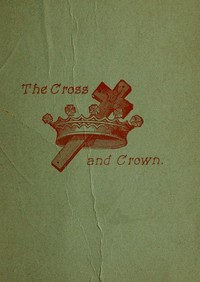
T. D. Curtis opens The Cross and Crown with a blunt epigraph from Hood—"Evil is wrought / From want of thought / As well as want of heart"—that immediately signals the poem's central argument: ignorance, not malice, perpetuates religious and political oppression. The prologue then launches into a series of stark contrasts: the cross is called "the tool of deep and ghastly wrong," the crown a device by which "men have been trampled down." Curtis's diction is deliberately provocative, pairing "Emblem of Ignorance and Cruelty" with "Banner of Despotism's foul career" in a single breath. The voice is that of a polemicist who expects resistance, using rhetorical questions ("Could more complete subversion be / Of reason, taste and decency?") to challenge the reader directly.
Diction of Defiance
Curtis selects words that carry moral weight and emotional charge: "crazy throng," "hell's dark prince," "deluded slave." The cross is not a symbol of sacrifice but an "instrument of cruelty" and a "sign of the impostor and the fool." The crown is linked to "base and bloody" tyranny. This lexicon is consistent throughout the excerpts—there is no softening or ambiguity. The poet's vocabulary creates a binary world: ignorance versus reason, superstition versus light, slavery versus freedom. Even when describing an ideal future, Curtis uses forceful nouns: "Harmonial Day," "quickening thrill," "blaze." The effect is a sermon-like urgency, as if the poem itself is a tool for awakening.
Dialogue as Rebuke
Curtis dramatizes key moments through imagined speech. In the prologue, Satan tempts Christ with "But worship me, the world is thine!" and Christ replies "Get thee behind; worship thy Lord!" This exchange is not scriptural paraphrase but a pointed rewriting: Curtis's Christ "taught no worship and believed in none." The poet uses direct quotation to stage a confrontation, then glosses it with his own interpretation. Later, the poem shifts to a series of exclamations and rhetorical questions: "Oh! why has Christ been so misunderstood?" and "Why will not men receive the light and live?" These are not characters speaking but the poet's own voice, yet they function as a kind of internal dialogue, pressing the reader to answer.
Structure of Antithesis
The poem is built on parallel contrasts. Each stanza of the prologue sets cross against crown, then the body of the work repeatedly opposes "cross or crown, beliefs or creeds" with "honest work, and upright thought and word." Curtis uses anaphora to reinforce these binaries: "No royal God there sits… / No jeweled throne… / No priest nor trembling devotee… / No cross no crown." The final vision of a harmonious realm is defined entirely by what it lacks—no rulers, no sacrifices, no worship. This structural repetition gives the poem a litany-like quality, even as it denounces liturgy. The effect is both rhythmic and argumentative, each negation driving home the poet's central thesis.
Setting as Moral Landscape
Curtis does not describe physical places. Instead, the setting is conceptual: the present world of "superstition's brutal reign" versus a future "realm where all is fair and free." The first is characterized by "fear," "cunning," and "greed"; the second by "love," "harmony," and "endless progress." The poet uses spatial metaphors—"lower realms" versus "mount on high"—to map moral states. The cross is "lifted upward everywhere" but the ideal society has "no streets all paved with gold" and "no harps of gold." This deliberate rejection of traditional heavenly imagery grounds the poem's utopia in a stripped-down, almost austere vision. The setting is not a place but a condition of the soul, accessible through "the light within."
Readers should attend to how Curtis's plain style—regular meter, end-rhyme, and direct address—serves his polemical purpose. The poem is not narrative but argumentative, each stanza a new thrust against institutional religion and monarchy. Notice the tension between the poet's call for individual reason and his own authoritative, preacherly tone. The excerpts suggest a work that is more manifesto than meditation, one that asks to be read aloud and debated.
There’s something grounding in Curtis’s quiet faith in inner moral law over the noise of institutions—a thought that lingers long after the poem ends. It reminded me of the gentle satire in The True Grecian Bend: A Story in Verse — Background and Themes, where fashion’s absurdity gets the same plainspoken, almost tender handling. Both feel like letters from a more patient century, asking us to look inward without ever raising their voice.