About 17 minutes
An Alphabet of Celebrities — Edition Insights
Science Fiction Utopias
3,754 recorded words. 0 minutes difference from this book's estimate.
View Gutenberg source #22818
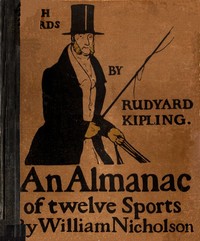
This digital edition of An Almanac of Twelve Sports — Background and Themes is described by source-level measurements including 3,755 words, 17 min estimated reading time, and 1 detected text section.
The text analysis averages about 22.8 words per sentence, while the detected sections provide another way to judge how the source is divided.
Project Gutenberg metadata also associates the work with “Sports in art,” connecting these edition facts with the source record’s subject description.
Explore this collection
These alternatives are selected using recorded categories and estimated reading time.
About 17 minutes
Science Fiction Utopias
3,754 recorded words. 0 minutes difference from this book's estimate.
View Gutenberg source #22818About 20 minutes
Science Fiction Utopias
4,492 recorded words. 3 minutes difference from this book's estimate.
View Gutenberg source #27182About 23 minutes
Science Fiction Utopias
5,078 recorded words. 6 minutes difference from this book's estimate.
View Gutenberg source #63530Search stored excerpts and compare books → Choose by your preferences →
Choices use stored catalog measurements. Estimates vary with reading speed. A shared category is a catalog label, not a claim that two books have the same argument or literary quality.
Search reads excerpt text stored with this catalog and links to its associated Gutenberg record. The connection is stored in the site database; this tool does not recheck that every excerpt is word-for-word identical to that external record. Excerpt search does not cover every chapter and does not verify historical publication dates.
Catalog snapshot checked: 2026-09-25. Coverage: 95 public books, 95 available source excerpts.
Read the complete public-domain text at its original source.
Read on Project GutenbergRudyard Kipling's twelve poems, each facing a monthly calendar page, form a compact almanac that treats sport as both ritual and folly. The verses, written for William Nicholson's woodcuts, shift between direct address and literary allusion. In January, the speaker admits a preference for reading Surtees's Handley Cross over actual hunting, quoting Jorrocks's remark that 'of all daft devils under the sun / A grey'ound's the daftest.' The poems rarely celebrate athletic prowess; instead they dwell on the costs, absurdities, and quiet withdrawals from the field.
Across the almanac, Kipling undercuts the expected praise of sport. The March boating poem describes 'lean days and lives enforced pure' endured by oarsmen, framing their discipline as a penance rather than a glory. The racing poem (February) warns directly: 'there are lots of things besides, / And I should leave this play alone.' This cautionary tone recurs, as if the speaker has seen enough of the game to know its risks. The hunting poem's opening—'Certes it is a noble sport'—sounds like a concession before the speaker retreats to the armchair. Kipling lets the reader hear a voice that has participated but now prefers to observe from a distance.
Kipling populates the verses with named characters and borrowed phrases. Jorrocks, the fictional Cockney grocer and huntsman from Surtees's novels, appears twice: once in the January poem and again in the February courting poem, where his dialect line is quoted verbatim. The hunting poem also name-drops 'Pigg, Binjimin and Arterxerxes'—other Surtees figures. These references assume a reader familiar with Victorian sporting fiction. The boating poem invokes 'The Pope of Rome' in a hypothetical comparison, while the closing lines of the June section introduce a candle metaphor: 'the price of the game is a candle— / One single flickering candle!' This literary density gives the almanac a layered texture, rewarding those who catch the allusions.
Each month opens with a full-page calendar grid listing days of the week and dates for 1898. The poems sit opposite these grids, creating a visual and thematic pairing. The calendar pages are not decorative; they anchor the verses in a specific year and season. Kipling's poems often comment on the month's characteristic sport—hunting in January, coursing in February, racing in March, boating in April—but the connection is sometimes ironic. The racing poem, for instance, appears under March, yet its advice to 'leave this play alone' seems at odds with the calendar's promise of a fresh season. This tension between the orderly grid and the skeptical verse gives the almanac its distinctive character.
Kipling's word choices in these poems favor the colloquial and the clipped. He uses contractions ('it's,' 'don't') and direct imperatives ('Reach down my Handley Cross again'). The vocabulary is plain but precise: 'quitted selle and swum for't' in the hunting poem uses archaic forms for a mock-heroic effect. The racing poem's line 'The horse is ridden—the jockey rides— / The backers back—the owners own' reduces the sport to a series of tautologies, stripping away glamour. This economical diction mirrors the almanac's format: each poem must do its work in a few lines. The result is a voice that sounds worldly, slightly weary, and unwilling to inflate the subject.
Readers approaching this almanac should attend to the interplay between text and image, though only the words are reproduced here. The poems reward slow reading: catch the allusions, note the shifts in tone from month to month, and consider how the calendar's regularity contrasts with the unpredictable outcomes of sport. Kipling's verses are best taken as a sequence of wry observations rather than a celebration—a record of one writer's amused, skeptical eye on the games people play.
That drizzly afternoon, I kept returning to Kipling’s wry shrugs at the season’s hunts—his poems made the victories feel hollow, the rituals somehow tender. Flipping pages, I noticed a similar teasing in his margins, almost a private joke. Later, at my desk, the memory of that irony nudged me toward A Fable for Critics — A Closer Reading, where the mockery felt familiarly affectionate, like rain on old slate.
A brief reflection can help important ideas stay with you longer.









