About 41 minutes
Songs of Innocence and of Experience — Inside the Classic
Historical Psychological Social Fiction
9,345 recorded words. 3 minutes difference from this book's estimate.
View Gutenberg source #1934
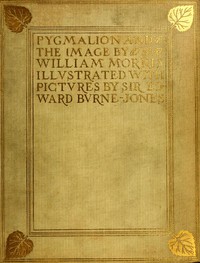
For Pygmalion and the Image — A Reader’s Guide, the stored edition analysis reports 9,923 words, 44 min estimated reading time, and 4 detected text sections.
The text analysis averages about 35.7 words per sentence, while the detected sections provide another way to judge how the source is divided.
Project Gutenberg metadata also associates the work with “English poetry -- 19th century,” connecting these edition facts with the source record’s subject description.
Explore this collection
These alternatives are selected using recorded categories and estimated reading time.
About 41 minutes
Historical Psychological Social Fiction
9,345 recorded words. 3 minutes difference from this book's estimate.
View Gutenberg source #1934About 39 minutes
Historical Psychological Social Fiction
8,912 recorded words. 5 minutes difference from this book's estimate.
View Gutenberg source #13649About 36 minutes
Historical Psychological Social Fiction
8,070 recorded words. 8 minutes difference from this book's estimate.
View Gutenberg source #36321Search stored excerpts and compare books → Choose by your preferences →
Choices use stored catalog measurements. Estimates vary with reading speed. A shared category is a catalog label, not a claim that two books have the same argument or literary quality.
Search reads excerpt text stored with this catalog and links to its associated Gutenberg record. The connection is stored in the site database; this tool does not recheck that every excerpt is word-for-word identical to that external record. Excerpt search does not cover every chapter and does not verify historical publication dates.
Catalog snapshot checked: 2026-09-25. Coverage: 95 public books, 95 available source excerpts.
Read the complete public-domain text at its original source.
Read on Project GutenbergWilliam Morris's Pygmalion and the Image (from The Earthly Paradise) is a narrative poem that reworks the classical myth through the lens of the artist's fervent devotion to his own creation. The poem is divided into four sections—'The Heart Desires,' 'The Hand Refrains,' 'The Godhead Fires,' and 'The Soul Attains'—each marking a stage in Pygmalion's psychological and spiritual journey. Morris's version, as Fitz Roy Carrington's commentary notes, prioritizes 'the passionate delight—enthusiasm verging upon madness—of the artist and craftsman in his own handiwork,' a theme that resonates with Morris's own creative temperament. The text is accompanied by four paintings by Edward Burne-Jones, originally part of a larger series of twelve designs from 1866–1867.
Morris portrays Pygmalion not merely as a sculptor but as a man whose entire emotional life is bound to his art. The poem opens with Pygmalion's prayer to Venus, followed by a vivid depiction of his despair when he believes his devotion has been in vain. The excerpt shows him leaving the temple, 'dazed with the light,' and wandering through a festive city where 'girls fit to move the moody man's desire' brush past him, yet he remains indifferent. His longing is directed solely toward the ivory image, which he calls 'his sole desire.' The contrast between the vibrant, sensual world of the festival and Pygmalion's internal isolation is stark: he sees lovers and dancers but feels 'reft of desire, all love and madness gone.' This tension between external vitality and internal barrenness underscores the poem's exploration of artistic obsession.
In the temple, Pygmalion experiences a vision that blurs the line between reality and delusion. He sees 'a thick, black cloud' shroud the altar and the image, then a 'dusky veil' raised, revealing the goddess. Yet the other worshippers remain 'sunk in their wonted works, with no surprise,' suggesting that the miracle is private, perhaps imagined. Pygmalion himself questions his perception: 'This, too, I dream, / No better day upon my life shall beam.' The poem leaves ambiguous whether the divine intervention is actual or a projection of Pygmalion's fervent hope. This ambiguity is central to the narrative, as it shifts the focus from external magic to the internal transformation of the artist. The 'Godhead Fires' section, though not fully excerpted, likely continues this theme of divine inspiration as a catalyst for creative fulfillment.
The poem's four-part structure mirrors the creative process: desire, restraint, divine spark, and attainment. Each section corresponds to one of Burne-Jones's illustrations, which Carrington describes as 'complete in the best sense' when viewed as a series. The illustrations, though only four, are designed to capture the 'text and spirit' of Morris's poem, with each painting gaining significance from its place in the sequence. The poem itself is 'homogeneous and admirably balanced in all its parts,' according to Carrington, who also notes that Morris's version surpasses earlier treatments by emphasizing 'spirituality' over the physical. This structural and visual harmony invites readers to consider how the interplay of word and image shapes the narrative's emotional arc, from the initial 'nameless hope' to the final attainment of the soul.
Readers approaching Pygmalion and the Image should attend to the poem's deliberate pacing and the way Morris uses the four-part division to chart an inner transformation. The accompanying illustrations by Burne-Jones are not mere decorations but integral to the work's meaning, each frozen moment capturing a pivotal emotional state. Consider how the poem's language—its shifts from despair to hope, from sensory overload to solitary focus—mirrors the artist's struggle between worldly distraction and creative absorption.
There’s something about Morris’s Pygmalion—the way he pours himself into the marble, hoping the shape will wake—that reminds me of another quiet afternoon with The Rubáiyát of a Bachelor — Inside the Classic, where a lonely man’s longing for companionship felt just as tender, just as unspoken. Both lingered with me afterward, like a half-remembered tune.
Use these questions to collect your thoughts before moving on.









