About 59 minutes
Walt Whitman, Yesterday & Today — A Reader’s Guide
Fantasy Juvenile Worlds
13,408 recorded words. 0 minutes difference from this book's estimate.
View Gutenberg source #31027
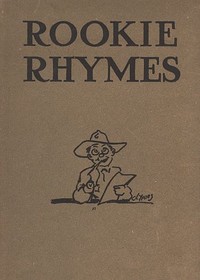
The source record for Rookie rhymes, by the men of the 1st and 2nd provisional training regiments, Plattsburg, New York — Context and Discussion measures this digital text at 13,410 words, 59 min estimated reading time, and 3 detected text sections.
The text analysis averages about 17.4 words per sentence, while the detected sections provide another way to judge how the source is divided.
Project Gutenberg metadata also associates the work with “World War, 1914-1918 -- Poetry,” connecting these edition facts with the source record’s subject description.
Explore this collection
These alternatives are selected using recorded categories and estimated reading time.
About 59 minutes
Fantasy Juvenile Worlds
13,408 recorded words. 0 minutes difference from this book's estimate.
View Gutenberg source #31027About 59 minutes
Fantasy Juvenile Worlds
13,533 recorded words. 0 minutes difference from this book's estimate.
View Gutenberg source #56357About 58 minutes
Fantasy Juvenile Worlds
13,340 recorded words. 1 minutes difference from this book's estimate.
View Gutenberg source #1045Search stored excerpts and compare books → Choose by your preferences →
Choices use stored catalog measurements. Estimates vary with reading speed. A shared category is a catalog label, not a claim that two books have the same argument or literary quality.
Search reads excerpt text stored with this catalog and links to its associated Gutenberg record. The connection is stored in the site database; this tool does not recheck that every excerpt is word-for-word identical to that external record. Excerpt search does not cover every chapter and does not verify historical publication dates.
Catalog snapshot checked: 2026-09-25. Coverage: 95 public books, 95 available source excerpts.
Read the complete public-domain text at its original source.
Read on Project GutenbergThe poems in Rookie Rhymes were composed by men of the 1st and 2nd Provisional Training Regiments at Plattsburg, New York, between May and August 1917. The collection showcases a range of authorial choices: some poems adopt a jaunty, rhyming meter to mock military life, while others shift into solemn free verse or ballad forms. The diction alternates between colloquial gripes—"punk" mess, "bawled" orders—and elevated language, as in "The Stadium, Plattsburg," which invokes Joan of Arc. This variety reflects the contributors' different backgrounds and attitudes toward training.
Many poems use humor to deflate the rigors of training. In "Play the Game," the speaker advises to "grin, and play the game" when faced with bad food, unfair blame, or danger. The repeated imperative "grin" becomes a mantra. "Rubaiyat of a Plattsburg Candidate" parodies Edward FitzGerald's Rubaiyat of Omar Khayyam, replacing wine and roses with "cotton pants O. D." and commands like "Fall in!" The quatrain form is preserved, but the content is deliberately anticlimactic: "I sometimes think that never battles din / Were so unwelcome as the words 'Fall in!'" This intertextual joke would have resonated with educated readers familiar with the original.
Several poems express irritation with military routine. "Inoculation Day" likely details the discomfort of medical procedures, while "Those Rumors" and "War's Horrors" hint at the anxiety of waiting. In "A Lament," the speaker bemoans lost comforts. The diction is often direct: "When for nothing you've been bawled, / Though you've done your best get called" captures the arbitrary nature of discipline. The repeated phrase "play the game" across multiple poems suggests a shared ethos of endurance. Yet not all frustration is voiced bitterly; some poems adopt a wry, almost affectionate tone toward the absurdities of camp life.
Alongside the humor, the collection includes earnest patriotic poems. "The Stadium, Plattsburg" contrasts a "song to France" with a "deeper, stronger cry" from America. The speaker hears "the mighty song of singing men" and envisions soldiers going forth "to die, / Because, God knows, they're going forth—to live!" The paradox is striking. Another poem, "The Call," uses imperative verbs to summon courage. These pieces employ a more formal, elevated diction—"thund'ring, trumpet-wise," "bleeding white"—and regular meter. The shift in register between sections highlights the range of emotional responses among the soldier-poets.
The poems ground their themes in specific, mundane details: "kidney beans and other junk," "cotton pants O. D.," "signal-flags and alidades." These references anchor the verse in the material reality of Plattsburg. "To My Sweetheart" lists daily routines—bugle call, drill, retreat—as occasions for love. "The Manual" likely describes drill instructions. The inclusion of a "Troopship Chanty" and "Fourth Company, N. E. Song" suggests that some poems were meant to be sung, reinforcing communal bonds. By cataloging shared irritations and small pleasures, the collection creates a documentary record of camp life in 1917.
Readers approaching Rookie Rhymes will find a mosaic of perspectives rather than a unified statement. The poems reward attention to their formal choices—parody, ballad, chant—and their use of specific, contemporary references. The collection offers insight into how soldiers processed training through verse, balancing complaint with camaraderie and earnestness with irony.
Holding this little book, I remembered my grandfather’s copy of War Rhymes by Wayfarer, its corners soft from a coat pocket. The same wry shrug at army food, the same tired joke about mud. War Rhymes by Wayfarer — Background and Themes gave me that feeling—not of war, but of men trying to make a small, human sound inside a huge machine. These rhymes are that sound, caught on paper.
Create a short personal record of your experience with this book.









