About 59 minutes
Walt Whitman, Yesterday & Today — A Reader’s Guide
Fantasy Juvenile Worlds
13,408 recorded words. 0 minutes difference from this book's estimate.
View Gutenberg source #31027
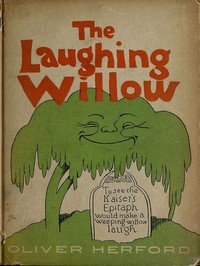
For The Laughing Willow Verses and Pictures — A Closer Reading, the stored edition analysis reports 13,533 words, 59 min estimated reading time, and 4 detected text sections.
The text analysis averages about 18.5 words per sentence, while the detected sections provide another way to judge how the source is divided.
Project Gutenberg metadata also associates the work with “World War, 1914-1918 -- Poetry,” connecting these edition facts with the source record’s subject description.
Explore this collection
These alternatives are selected using recorded categories and estimated reading time.
About 59 minutes
Fantasy Juvenile Worlds
13,408 recorded words. 0 minutes difference from this book's estimate.
View Gutenberg source #31027About 59 minutes
Fantasy Juvenile Worlds
13,410 recorded words. 0 minutes difference from this book's estimate.
View Gutenberg source #34269About 58 minutes
Fantasy Juvenile Worlds
13,340 recorded words. 1 minutes difference from this book's estimate.
View Gutenberg source #1045Search stored excerpts and compare books → Choose by your preferences →
Choices use stored catalog measurements. Estimates vary with reading speed. A shared category is a catalog label, not a claim that two books have the same argument or literary quality.
Search reads excerpt text stored with this catalog and links to its associated Gutenberg record. The connection is stored in the site database; this tool does not recheck that every excerpt is word-for-word identical to that external record. Excerpt search does not cover every chapter and does not verify historical publication dates.
Catalog snapshot checked: 2026-09-25. Coverage: 95 public books, 95 available source excerpts.
Read the complete public-domain text at its original source.
Read on Project GutenbergOliver Herford's The Laughing Willow opens with a sequence of epitaphs for Kaiser Wilhelm II, each a compressed joke: 'Here lies Willy's mortal clay / In its Mother Earth's caresses. / Willy's soul has flown away— / Where it is you have two guesses.' The book's title, explained in a couplet, promises that even a weeping willow would laugh at such an epitaph. This sets the tone for a collection that moves between wartime satire and lighter domestic verse, all illustrated by Herford's own caricatures.
The opening section, 'The Laughing Willow,' is dominated by short, punchy poems about World War I figures. Herford's epitaphs for the Kaiser rely on wordplay and absurdity: 'He sought for peace—he seeks it still' turns the cliché of seeking peace into a literal joke about death. The poem 'The Truth About Russia' uses a mock-wedding feast to satirize Russian politics, counting 'ninety-nine' guests because 'no one ever counts the Groom!' The Cossack is described as 'so much at home / Upon his horse' that he roams from Vladivostok to Odessa. These verses are brisk, often ending with a twist that deflates their targets.
After the war poems, the collection pivots to 'About People I Have Met' and 'People I Have Not Met,' where the tone softens into whimsy. 'The Highbrow Hen' refuses to lay eggs because she has 'taken up birth control.' 'Sir Ippykin' tells a mock-heroic tale of a knight who colludes with a giant to avoid marrying a princess, ending with the giant 'fat, flagrant, and well fed' still living. The voice here is less barbed, more playful, with longer narrative poems that rely on absurd premises rather than political jabs. Herford's caricatures, though not reproduced in the text, likely mirror this shift from sharp satire to gentle comedy.
Herford varies his pacing through form and length. The epitaphs are two to four lines, delivering quick laughs. 'The Psychology Cop' stretches to a dozen stanzas, telling a story of a policeman who arrests a man for 'insultin' that there dame' based on psychological mind-reading. The poem builds a comic scene with dialogue and dialect. In contrast, 'Phyllis Lee' uses archaic diction and a pastoral setting for a flirtatious exchange. This structural variety—from compressed epigram to extended narrative—keeps the collection from becoming monotonous, though the war poems cluster at the front, creating a front-loaded intensity that later dissipates.
Readers should note that the excerpts end before the final sections, including 'Other People Including Mark Twain,' which may contain further shifts in tone. Herford's work rewards attention to his wordplay and the interplay between text and image. The collection is best approached as a period piece of wartime humor, where the laughter is often at the expense of the powerful, but the later poems reveal a lighter, more absurdist side.
Herford’s willow branches bend with laughter, yet their shadows fall long upon war’s ugliness. I always found that strange, how a playful twig can carry such weight. It reminds me of the quiet gloom beneath another’s feathers. Poe’s bird whispers the same secret—that even our merriest sketches are sewn onto darker cloth. The Raven — Text and Context holds that thread for me.
Use these questions to collect your thoughts before moving on.









