About 49 minutes
Fairies and Fusiliers — A Reader’s Guide
Fantasy Juvenile Worlds
11,123 recorded words. 1 minutes difference from this book's estimate.
View Gutenberg source #10122
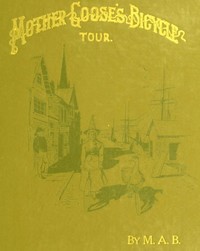
Mother Goose's Bicycle Tour — Themes and Context can be approached with a clearer sense of reading commitment from its source measurements: 11,483 words, 50 min estimated reading time, and 25 detected text sections.
The text analysis averages about 15.9 words per sentence, while the detected sections provide another way to judge how the source is divided.
Project Gutenberg metadata also associates the work with “Children's poetry,” connecting these edition facts with the source record’s subject description.
Explore this collection
These alternatives are selected using recorded categories and estimated reading time.
About 49 minutes
Fantasy Juvenile Worlds
11,123 recorded words. 1 minutes difference from this book's estimate.
View Gutenberg source #10122About 52 minutes
Fantasy Juvenile Worlds
11,944 recorded words. 2 minutes difference from this book's estimate.
View Gutenberg source #63980About 44 minutes
Fantasy Juvenile Worlds
10,012 recorded words. 6 minutes difference from this book's estimate.
View Gutenberg source #42407Search stored excerpts and compare books → Choose by your preferences →
Choices use stored catalog measurements. Estimates vary with reading speed. A shared category is a catalog label, not a claim that two books have the same argument or literary quality.
Search reads excerpt text stored with this catalog and links to its associated Gutenberg record. The connection is stored in the site database; this tool does not recheck that every excerpt is word-for-word identical to that external record. Excerpt search does not cover every chapter and does not verify historical publication dates.
Catalog snapshot checked: 2026-09-25. Coverage: 95 public books, 95 available source excerpts.
Read the complete public-domain text at its original source.
Read on Project GutenbergM. A. Bonnell’s Mother Goose’s Bicycle Tour opens with a dedicatory acrostic to Queen Alexandra, each line beginning with a letter of the author’s name, and a second poem to Miss Liv Nansen that compares her to “the drifting snows of northern realms.” The work then launches into a series of adapted nursery rhymes, each reframed as a stop on a bicycle journey. The first poem, “The Departure,” introduces the conceit: Mother Goose’s original rhymes are called a “pot pourri” of “merry rhymes and odd conceits.” This sets a playful, self-aware tone that persists throughout.
The most distinctive feature of Mother Goose’s Bicycle Tour is its systematic integration of French vocabulary into English nursery rhymes. In “The Apple-Pie Party,” each letter of the alphabet introduces a word and its French equivalent: “H was for Harry, who served the pie in great glee; / In France his name is pronouncéd ‘Henri.’” The glossary at the end provides pronunciations and translations for dozens of phrases, from “À cause de ce désastre” to “Connaissez-vous ma mère?” This suggests the book was designed as a language-learning tool, though the rhymes themselves remain primarily English. The French insertions are often playful, as when “Xantippe” is glossed as a “mégère” (shrew). The effect is a hybrid text that teaches vocabulary through familiar rhythms.
Bonnell frequently undercuts her own poetic skill. In the opening verses, she writes of “meagre wit and rhyming loose” and asks for “kind indulgence” for “Mary Susan Goose.” This self-mockery recurs in the dedication, where she calls the rhymes a “pot pourri” and admits they are “odd conceits.” The tone is not apologetic but wry, inviting the reader to enjoy the playful imperfection. This contrasts with the formal dedication to Queen Alexandra and the earnest praise of Liv Nansen, creating a tension between high-flown tribute and down-to-earth humor. The author seems aware that her adaptations are lighthearted, and she leans into that quality rather than striving for literary gravity.
The table of contents lists over forty entries, many of which are familiar nursery figures: Pussy Cat, Jack and Jill, Old King Cole, Humpty Dumpty, and others. But Bonnell also includes original characters like “This Very Black Man of Siam” and “This Lazy Old Man of Moselle,” as well as French-themed pieces such as “Le Petit Maréchal” and “La Petite Étrangère.” The settings shift from domestic scenes (the kitchen, the shoemaker’s shop) to fantastical ones (the frog and the crow, the apple-pie party). This variety suggests a deliberate effort to expand the nursery rhyme universe, blending traditional British figures with continental European references. The bicycle tour framing ties these disparate elements together, implying a journey through a landscape of story and song.
Readers approaching Mother Goose’s Bicycle Tour will find a text that rewards attention to its linguistic play and structural quirks. The glossary is essential for catching the French puns, and the self-deprecating asides offer a glimpse of the author’s personality. The book is best read as a curiosity of Edwardian children’s literature, where education and entertainment are deliberately intertwined.
The rain kept time with the rhymes, and I noticed how Bonnell’s little glossary made foreign words feel like old friends. That gentle trust in the reader’s patience stayed with me. Later, I found the same quiet faith in another book, Hero and Leander — A Reader’s Guide, whose marginal notes felt like someone leaving a lamp on for me.
Use these questions to collect your thoughts before moving on.









